About
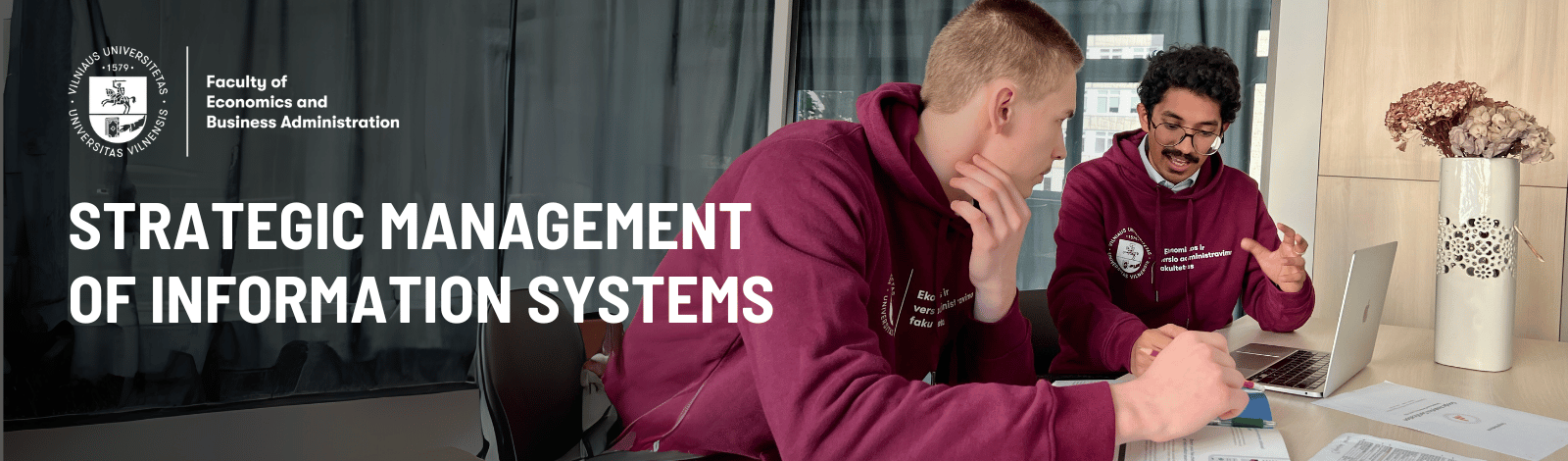

The Strategic Management of Information Systems master’s programme prepares specialists capable of strategically planning, designing, and managing information systems that support organisational goals and digital transformation. The programme develops competencies at the intersection of information technologies, management, and strategic decision-making, with a strong emphasis on analytical thinking, innovation, and leadership.
Students gain a solid foundation in frontier and intelligent technologies, information systems design, enterprise architecture, and analytical information technologies, while also developing managerial skills in project management, leadership, innovation, entrepreneurship, and change management. Continuous scientific research work throughout the programme ensures graduates are able to apply research-based insights to real organisational challenges.
Important admission note for non-EU/EFTA applicants: The gap since completing your Bachelor's degree must not exceed five years.
You can find more information by contacting the faculty’s study coordinators:
Study Format and Schedule
- Duration: 1.5 years
- Language of instruction: English
- Study mode: On-campus
- Schedule: Weekday evenings, 17:45–21:00
- Study load: 4–5 courses per semester
The Master’s thesis is developed and defended in three stages, across the first, second, and third semesters, ensuring continuous research progress and close academic supervision.
Course Overview
This programme integrates two highly demanded and closely connected fields:
- Technological innovation and information systems, and
- Strategic management and decision support in organisations.
During your studies, you will:
- Learn modern information systems design and analysis methods
- Explore strategic decision support systems and knowledge integration between IT and business strategy
- Analyse interactions between information systems and their users
- Develop skills in project management, based on internationally recognised PMP methodologies
- Strengthen competencies in leadership, strategic planning, and organisational decision-making
Learning Outcomes and Graduate Profile
Upon graduation, students are able to:
- Design and evaluate information systems and enterprise architectures aligned with organisational strategy
- Apply analytical and intelligent information technologies for decision support
- Manage international and technology-driven projects
- Conduct independent scientific research and apply research results in practice
- Lead and support digital transformation, innovation, and change in organisations
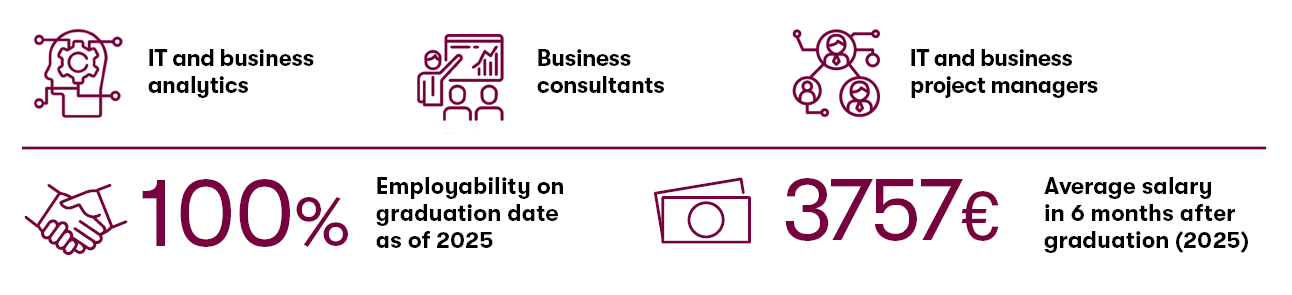
Graduates are prepared for careers as IT strategy managers, business analysts, digital transformation leaders, project managers, or consultants, working in both private and public sector organisations operating in an increasingly data-driven and technology-intensive environment.
Uniqueness of the Programme
- Cutting-edge and practice-oriented curriculum that provides advanced, up-to-date knowledge aligned with current developments in information systems, digital strategy, and innovation management.
- Strong connection to industry practice: all core courses are taught by lecturers with extensive real-world business experience, complemented by guest lecturers from leading international and regional IT companies.
- Work–study balance designed for professionals: evening classes enable students to immediately apply newly acquired knowledge and skills in their professional environment, reinforcing learning through real-life practice


Entry Requirements
Lecturers
 Svetlana Nemitko
 Jonas Lankutis
 Justina Valentukevičė
 Gediminas Rumšas



 Programme Coordinator